
Trauma Part 1: How We Got Here
Once we step away from the Freud-inspired trope of fancying your mum or a compulsion to relive something awful that happened to you, we can see a much more beautifully complex relationship between trauma and kink.

Once we step away from the Freud-inspired trope of fancying your mum or a compulsion to relive something awful that happened to you, we can see a much more beautifully complex relationship between trauma and kink.
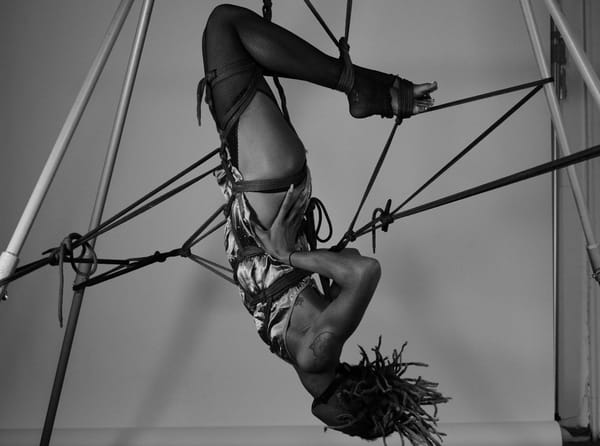
Mapping our nervous system in a scene in the way we have in this series is the start of a journey of curiosity. This self-knowledge and self-inquiry will hopefully lend your scenes a new edge to explore, and a new way to think about yourself and your kinks.

We go into a kink scene with the intention of playing with elements of the sympathetic nervous system: a little bit of fear, an elevated heart-rate, intense focus. Or maybe playing with elements of dorsal vagal: disconnection, a lowered heart-rate, floaty feelings.

Kink often isn’t about entering one state, but about intentionally moving between states while maintaining connection. Looking at the descriptions of the different nervous system states, ask yourself, Where am I during a scene that I’m enjoying?

Every touch, word, command, sensation, and moment of stillness is input. That input is not just interpreted cognitively; it is processed through the mind-body - through systems that evolved to keep us safe, connected, and alive.

When we bring our attention away from doing and into sensing, it automatically brings the focus away from chasing sensation and into experiencing sensation. Deepened awareness of the senses can make them more powerful and intense, potentially changing the scene completely.

When we honour the one-ness of mind and body, we begin to see kink not as an escape from ourselves, but as a way back into ourselves. Somatics gives us a way to understand kink not just as an activity, but as a conversation between our senses, systems, and selves.