Neurodivergence Part 2: The Deep Dive
Because neurodivergence is, by definition, a nervous system difference, it is rare that a neurodivergent person is in that happy balance of stimulation. Like any nervous system experience, it helps to understand what's happening so we can work with it rather than against it.

Now we have a broad understanding of what neurodivergence is from a somatic point of view, we can see why kink can be so appealing to many neurodivergent people.
A neurodivergent nervous system is often overwhelmed and overstimulated. Or, it can be under-stimulated, seeking sensory input.
Because neurodivergence is, by definition, a nervous system difference, it is rare that a neurodivergent person is in that happy balance of stimulation. Like any nervous system experience, it helps to understand what's happening so we can work with it rather than against it.
And when we do understand our own nervous systems, and those of our partner(s), kink can become one of the most genuinely regulating, liberating experiences available to a neurodivergent nervous system.
Sensory Stimulation
They say that if you’ve met one neurodivergent person you’ve met… one neurodivergent person. This is because neurodivergence is a spectrum; not in that it is a line from “neurodivergent” to “neurotypical” but in that it has a range of different traits and attributes, many of which pull in opposite directions.
The confusing thing here is that a sensation that can be calming, grounding and pleasant for one neurodivergent person can be overwhelming, triggering or unpleasant for someone else. Understanding your own sensory profile can be helpful: what senses do I seek the stimulation of? Which do I avoid?
And in this consideration, remember that this may change based on how you’re feeling. Sensory stimulation you seek one day could be overwhelming another day – after a long day at work or at a different point of your cycle, for example. Understanding this can be the self-awareness that helps you plan scenes that work for you and your nervous system.
Sensory Seeking
Many neurodivergent people have sensory seeking behaviours. This can be for one of two, opposing reasons: either we are hyposensitive to input, so we seek more of it… or we are hypersensitive, and want input to drown out the background noise.
Sensations that neurotypical people may find unpleasant or overwhelming can actually be grounding or calming to a neurodivergent nervous system: a single, strong input that cuts through the noise can be incredibly soothing.
In kink, this looks like sensory stimulation like pain play, for nociceptive input (which many neurodivergent people are hyposensitive to), including impact play, wax and sharps. It could be temperature play, with ice cubes, hot wax or toys that have been in the freezer. It could be proprioceptive input, like rope, bondage and trampling.
These proprioceptive inputs can also be considered self-swaddling – a somatic practice that many people find grounding because of the strong proprioceptive and touch input. This is why many neurodivergent people enjoy weighted blankets, for example, or being in a hammock or rocking chair.
Try out this self-swaddling practice from Linda Thai if you want to experiment with somatic self-swaddling. It is this same sensation I seek when I do shibari self-ties!
Tops also have sensory seeking behaviour: the sensation of the rope in your hands, or the sensation of the paddle swinging through the air. This is less likely to be an “overwhelming, drowning out all other input” type of sensation, because a huge part of being a top in a scene is staying in control. Instead, tops often find their own regulating inputs in the physical sensations of the scene itself.
Knowing what you seek and why, can transform kink from something that happens to your nervous system into something you can actively use.
Sensory Relief
The opposite side of the coin from sensory seeking behaviour is sensory avoidance. Sitting in a dark, quiet room; eating bland, familiar foods. These provide relief for an overwhelmed nervous system.
Sensory avoidance in kink comes out most often as sensory deprivation: earplugs to cut out sounds; blindfolds to reduce visual input.
And we can use the sensory deprivation alongside the sensory stimulation. Once we know what we want less of and what we want more of, we can cut out the overwhelming input so that we can handle the desired inputs.
If the idea of sensory stimulation and avoidance has piqued your curiosity, I will do a future series on mapping your own sensory profile, so you can bring this self-knowledge into your negotiations and scene planning. Watch this space!
Emotional Safety Shears
I like to approach kink from the point of view of something will go wrong, at some point. Not in an anxiety-inducing, hyper-vigilant way, by any means. Rather, if we assume that something will go wrong we plan for that. We consider what might go wrong, and mitigate it. We think about what we would like to happen if something does go wrong, if someone gets triggered. And then, in the scene, we feel more able to let go and relax, because all eventualities are planned for.
In a shibari scene, for example, we always have a pair of safety shears on hand. If there’s a fire, or if a rope bunny has a seizure or faints, we need to ensure the safety of everyone involved. Knowing shears are available can therefore be regulating; knowing that there is a plan if something does happen.
Planning for meltdowns, shutdowns and masking is no different from this: understanding what might go wrong and explicitly planning for it in a way that is regulating as well as minimising risk. Planning for the hard moments is what makes the good moments possible.
Masking
Many neurodivergent folx, especially AFAB and trans people, mask: pretending we’re fine when we’re not, forcing ourselves to communicate in neurotypical ways when it’s uncomfortable, suppressing stims and other obviously neurodivergent behaviours.
One reason that many neurodivergent people are drawn to kink is the explicit communication structures centred in the scene: negotiations, check-ins, safe words and rules.
It can take a hot minute to get used to this, though. When we’re used to interactions that don’t have these standards, and when we’re used to masking, we can avoid asking for what we want or need during a negotiation, we can avoid using safe words, and we can become hung up on the rules of the situation rather than centring the safety that the rules are there to protect.
This can come out in scenes, especially if we’re playing with someone new, playing in a public space (such as a kink event), or we struggle with unmasking.
If we are used to pretending everything is okay when the fan is too loud in work, of course it’s hard to say “the rope is too tight” or, “ that sensation was too strong”.
This could look like performing enjoyment while actually waiting for the scene to end; not using safe words when you want to, pushing through overwhelm instead of asking for a break, and generally putting “being a good top/bottom” over your own enjoyment of the scene.
Rejection Sensitivity
Neurodivergent people are often sensitive to rejection, meaning we experience it more strongly (actually as physical pain!) and often experience it when there is none. This is from a mixture of neurological differences (in the case of ADHD) and also a lifetime of being told you’re not enough/too much/not trying hard enough…
To try to avoid the painful feeling of rejection, a neurodivergent person may anticipate where there might be rejection and avoid that scenario:
If I tell my top this is overwhelming, they may feel bad and then I would feel rejected, so it’s better to stay quiet.
If I tell my bottom I want to end the scene now they may feel disappointed and then I would feel rejected, so it’s better to keep going.
Of course, we may do this so automatically from years of social conditioning, we aren’t even aware of the thought process behind it.
The good news is that kink's explicit communication structures are almost uniquely well-suited to helping neurodivergent people unmask safely. Next week we'll look at exactly how to use them.
Meltdowns and Shutdowns
Meltdowns and shutdowns are the neurodivergent nervous system’s fight, flight, freeze, fawn or flop responses.
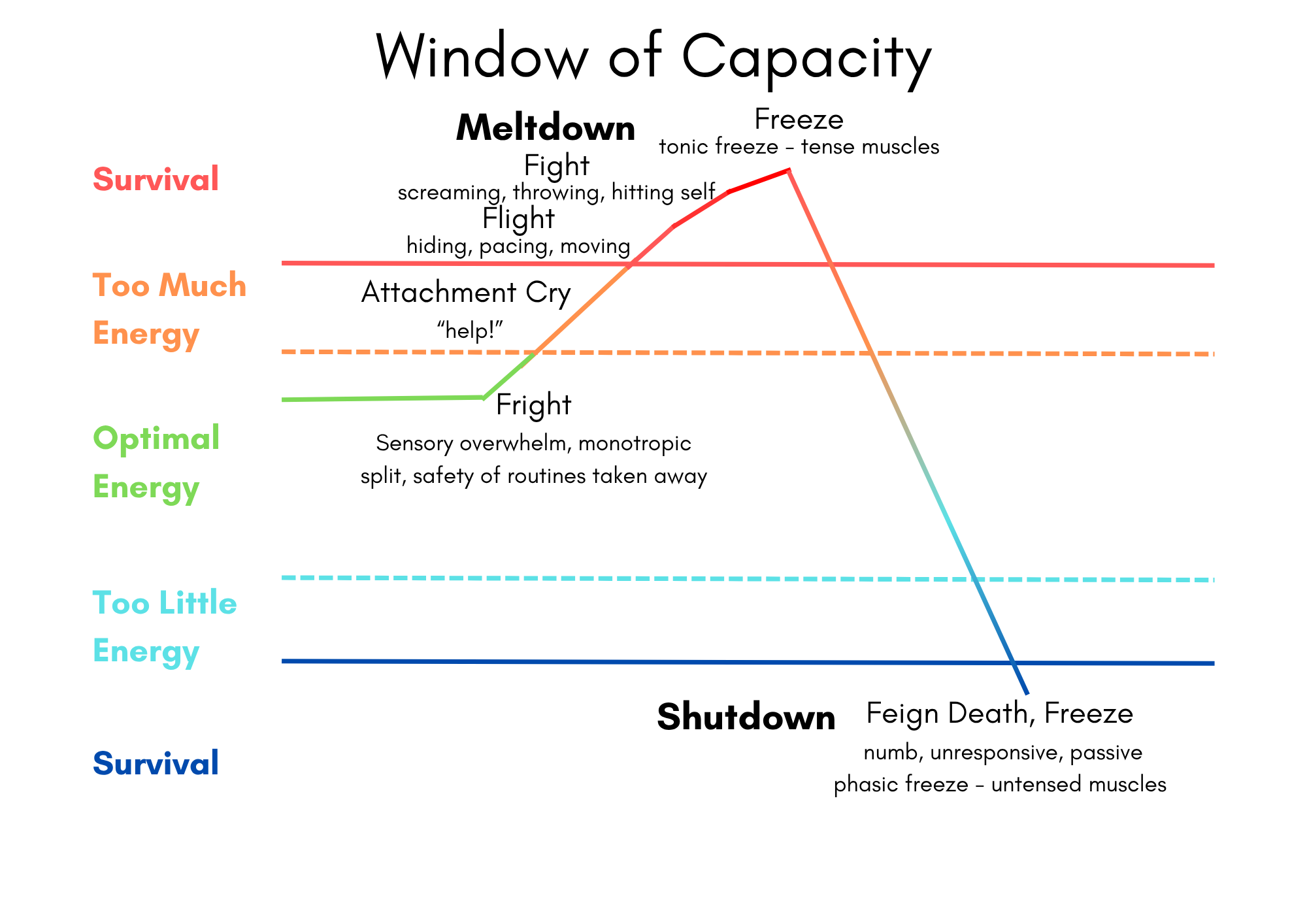
And because kink is nervous system play, we are often already playing with these responses, or playing around their edges. So meltdowns and shutdowns may happen; especially if we are doing edge play, or with someone new, or masking.
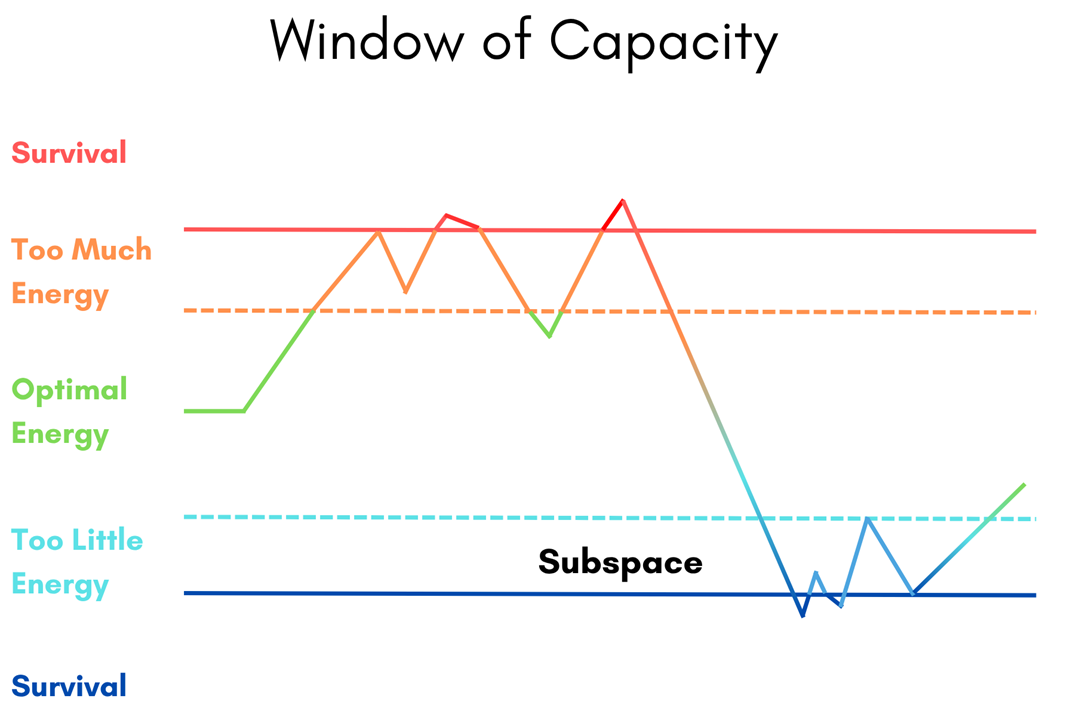
For bottoms, a meltdown in a scene could look like someone being triggered: crying, shouting, having a panic attack. For tops, it could be losing control of the scene: hitting too hard, becoming a little too sadistic.
A shutdown, however, is more likely for both tops and bottoms.
Tops are often focused on maintaining control, so the sympathetic responses may not surface in the same way.
And for bottoms, scenes often involve deliberately playing with the bottom’s sympathetic nervous system, so when that is pushed over the limit we don’t stay in sympathetic, we crash down into a dorsal vagal shutdown.
Whether top or bottom, in a shutdown we become disconnected and numb. We may stop checking in with our partner(s) – potentially putting them at risk.
Another risk here is that a shutdown and subspace can look similar, because the nervous system state is similar. We might go quiet or unresponsive, we might feel numb, we might become more compliant.
Understanding the difference and being able to communicate it is one of the most valuable things you can bring to a scene.
Learning from Your Nervous System
Learning to unmask and be yourself – maybe for the first time ever, is not a simple, quick task. It is something people learn to do slowly, over years; and many of us choose to still mask in some situations.
But the kink scene can be a great place to unmask. It’s very neurodivergent friendly; packed full of neuroqueerdos whose special interest is kink. There are explicit communication standards and no expectations of eye contact or other forms of masking.
Next week we close the series with the good stuff: how to map your nervous system; build scenes that actually work for you; unmask at your own pace; and find a community where you can finally just be yourself.
You can now access my curated resource library here. There is a whole section dedicated to neurodiversity resources I personally use!